Best Time of Year to Pour Concrete in North Richland Hills, TX
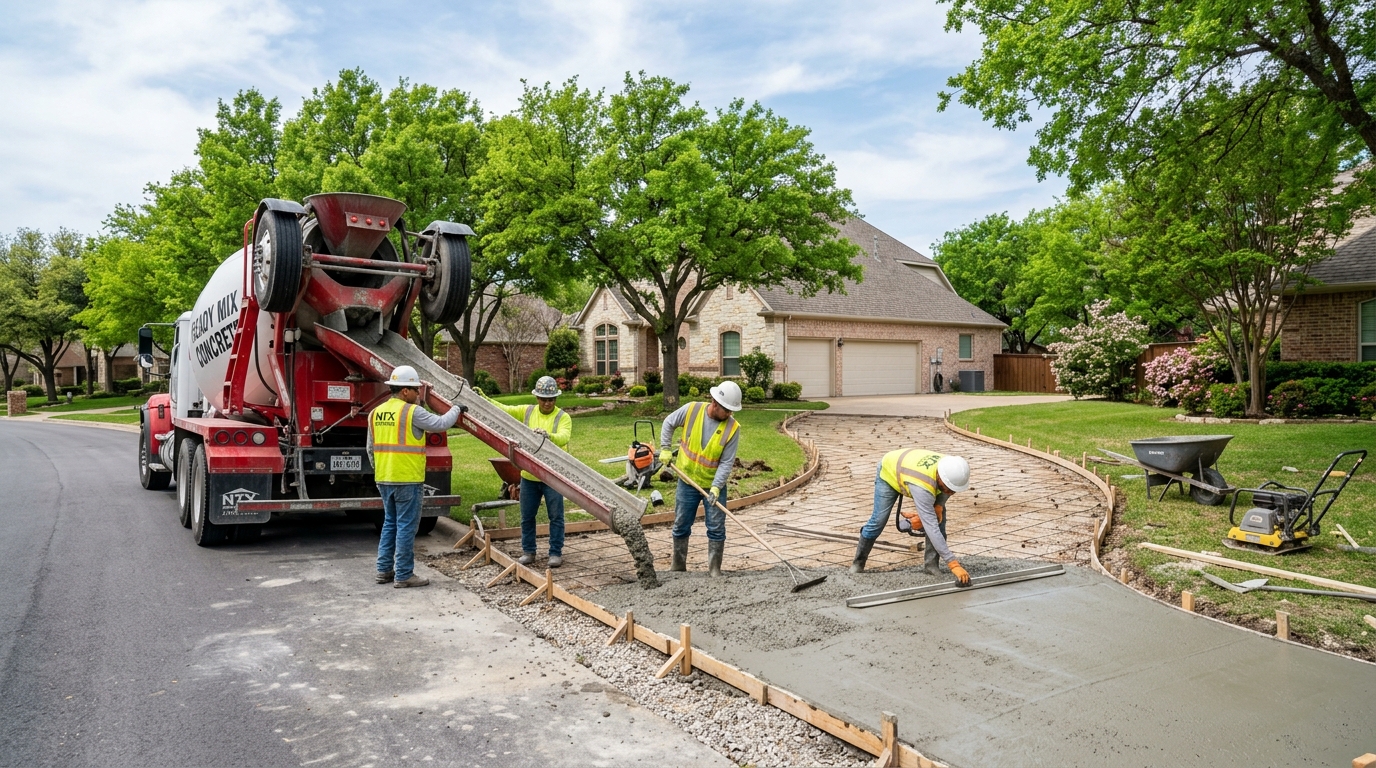
Timing matters more for concrete than most homeowners realize. Get the timing right and your driveway or patio cures at the correct rate, achieves its design strength, and looks great for decades. Get it wrong — pouring in extreme summer heat without the right precautions, for example — and you risk surface cracking before the slab even sets. North Richland Hills sits in one of the most demanding climates for concrete timing in the country, and the seasonal guidance for NRH is meaningfully different from what applies in milder markets.
In this post, we will cover how temperature and humidity affect concrete curing, the best and worst seasons for concrete work in North Richland Hills, what precautions allow good-quality work in the challenging summer months, and how to use the seasonal guide to plan your project.
Schedule Your NRH Concrete Project at the Right Time
North Richland Hills Concrete Pros manages seasonal timing on every pour. Call (888) 376-0955 for a free estimate.
Why Temperature and Humidity Matter for Concrete
Concrete hardens through a chemical process called hydration — the reaction between water and cement particles that creates the mineral bonds giving concrete its strength. This process is time-sensitive and temperature-sensitive.
Too cold: Below 40°F, hydration slows dramatically. Below 32°F, water in the mix can freeze, expanding and disrupting the developing bonds before they’re strong enough. Concrete poured in freezing conditions must be protected with insulating blankets and heated forms to maintain acceptable curing temperatures.
Too hot: Above 90°F — and especially above 100°F, which NRH hits routinely from June through August — water evaporates from the concrete surface faster than the hydration reaction can consume it. The result is a phenomenon called plastic shrinkage cracking: fine surface cracks that appear before the concrete has even hardened, caused by rapid surface drying. Hot concrete also sets faster, which shrinks the window for finishing operations and stamped concrete work.
Humidity: Low humidity accelerates surface evaporation, worsening the hot-weather cracking risk. High humidity (common in NRH’s spring) slows evaporation and extends the finishing window.
The Best Seasons for Concrete in North Richland Hills
Spring: March–May (Optimal)
Spring is the best concrete season in North Richland Hills. Daytime highs typically range from 65°F to 85°F — the ideal curing temperature range — with overnight lows well above freezing. Moderate rainfall means the soil has consistent moisture, which is favorable for concrete on NRH’s clay soils (consistent soil moisture = less clay movement = lower stress on the new slab).
The one caveat in spring is North Texas’s thunderstorm season. Heavy spring rains can damage fresh concrete if a storm rolls in while the surface is still plastic. We monitor weather forecasts carefully for spring pours and schedule around predicted rain events.
For most residential projects — driveways, patios, walkways — spring is when we recommend scheduling. Spring pours have the longest available finishing window, the best curing conditions, and the most predictable results.
Fall: September–November (Optimal)
Fall is the second-best season and in some ways the more predictable of the two optimal windows. Temperatures moderate quickly after NRH’s brutal August, and by September the overnight freeze risk is still weeks away. October and early November offer some of the most consistent concrete-friendly temperatures of the year — cool mornings, warm afternoons, low humidity.
Many homeowners prefer fall scheduling for patio projects specifically: a fall pour means the patio is complete and fully cured well before the summer entertaining season the following year.
Spring or Fall — Lock In Your Project Now
Our schedule fills up during peak season. Call (888) 376-0955 to secure your spot.
The Challenging Seasons
Summer: June–August (Manageable With Precautions)
North Texas summers are the hardest time to pour concrete. Temperatures regularly exceed 100°F in July and August, and low humidity compounds the rapid evaporation problem. Fresh concrete can crack from plastic shrinkage within hours of pouring if conditions aren’t managed correctly.
That said, summer concrete work is feasible with the right approach:
Early-morning pours. Scheduling the pour for 6–7 a.m. when temperatures are at their lowest gives concrete several hours of moderate temperature before the afternoon heat peaks. Much of the critical early curing occurs before it gets genuinely dangerous.
Evaporation retarders. Chemical evaporation retarders sprayed on the concrete surface slow moisture loss during finishing, extending the working window and reducing plastic shrinkage risk.
Curing compounds. Applied immediately after final finishing, curing compounds seal the surface to retain mix water for hydration. This is the single most important step for summer concrete quality.
Pre-wetting and shade. Pre-wetting the sub-base and shading the concrete during curing with wet burlap or white polyethylene sheeting keeps the slab from overheating.
We can pour concrete in NRH’s summers and produce high-quality results — it just requires more active management than the moderate shoulder seasons.
Winter: December–February (Conditional)
Winter in North Richland Hills is mild most years, but freeze risk is real. The city typically sees a few overnight freeze events per winter, and occasionally a sustained cold event with daytime temperatures below 40°F. Concrete poured when overnight temperatures are below 32°F must be protected with insulating blankets — and we don’t schedule pours when a freeze is forecast within the first 24–48 hours of curing.
Mid-winter dry spells with temperatures consistently between 45°F and 65°F are actually quite good for concrete curing — low humidity, no extreme heat, and stable soil moisture. Late February often sees some of the best concrete conditions of the year.
We evaluate winter pour conditions case by case. If the forecast supports it, winter concrete is perfectly viable.
Seasonal Guide for Specific Project Types
Stamped concrete: Prioritize spring and fall. Stamping requires a precise timing window when the concrete surface is workable enough to receive the stamp but firm enough to hold the impression. Summer heat shrinks that window significantly and increases the risk of stamping too early or too late.
Foundations and large slabs: These pours are less timing-sensitive because the thermal mass of a large pour moderates temperature swings. Early-morning summer pours work well for large slabs.
Driveways and patios: All seasons work with appropriate precautions. Spring and fall preferred; summer feasible with early scheduling; winter conditional on weather forecast.
Retaining walls: Foundation footings must be poured when freezing is not imminent. Wall construction itself is less temperature-sensitive. Spring and fall preferred.
Planning Your NRH Concrete Project
Spring and fall booking fills up quickly in North Richland Hills. Homeowners who wait until June to schedule a spring project often find contractors booked. Planning ahead — ideally 4–8 weeks before your target start date — gives you the best access to the optimal seasonal windows.
For project-specific timing considerations, see our guides on concrete driveway installation and concrete patio installation. For pricing that helps you budget before you schedule, read how much a concrete driveway costs in North Richland Hills.
Use our project assessment quiz to clarify your project type and timeline before reaching out for an estimate.
Plan Your NRH Concrete Project for the Right Season
North Richland Hills Concrete Pros works year-round. Call (888) 376-0955 to find the best timing for your project.
Related: