Maintaining Your Concrete Driveway in Texas Weather
A concrete driveway in North Richland Hills is a significant investment — and like any investment, it benefits from regular maintenance. The good news is that concrete is one of the lowest-maintenance paving materials available. The even better news is that a consistent but simple maintenance schedule can extend the life of your NRH driveway from a respectable 20–25 years to 40 years or more. The challenges are specific to North Texas: intense UV, expansive clay soils, occasional freeze events, and the dramatic wet-to-dry cycles that stress concrete in ways milder climates don’t.
In this post, we will cover the essential maintenance tasks for NRH concrete, the sealing schedule that North Texas UV demands, how to identify and respond to cracks early, and seasonal care considerations unique to the DFW climate.
Concrete Maintenance Questions for Your NRH Driveway?
North Richland Hills Concrete Pros advises on care and handles repairs. Call (888) 376-0955.
The Most Important Maintenance Task: Sealing
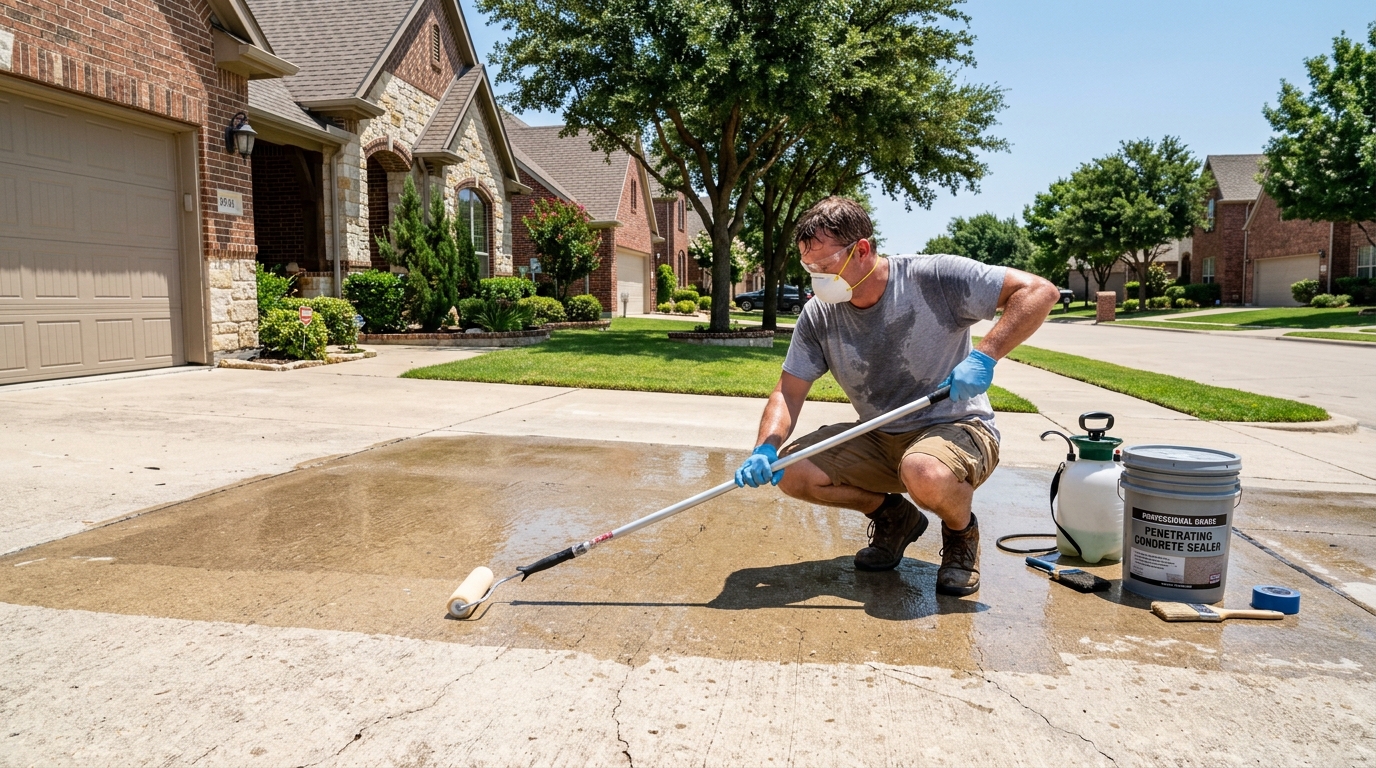
Sealing is the single most effective maintenance action for concrete in North Richland Hills. An appropriate sealer does three things: it slows moisture penetration (reducing the freeze-thaw damage that even North Texas’s mild winters can cause), it blocks UV radiation that degrades cement paste and causes surface scaling, and it provides a surface that’s easier to clean and more resistant to staining.
For plain concrete driveways: A penetrating concrete sealer applied every 3–5 years is sufficient. Penetrating sealers bond with the concrete matrix rather than forming a surface film, providing moisture protection without changing the surface appearance.
For stamped concrete driveways and patios: A UV-stable acrylic topical sealer is needed and should be reapplied every 2–3 years. Stamped concrete loses its color and surface protection faster than plain concrete because the finish relies on the sealer to maintain appearance. North Texas UV intensity is particularly hard on stamped concrete that isn’t consistently sealed.
Signs your concrete needs sealing: Water no longer beads on the surface (it soaks in instead), the surface has a dull or chalky appearance, or you notice fine surface scaling beginning to develop.
Crack Management: Early Is Cheaper
The expansive clay soils beneath NRH driveways will eventually create some stress on any concrete slab. Control joints in the slab direct that stress to predetermined locations, but cracks can still appear — especially in slabs that weren’t installed with adequate reinforcement or proper thickness.
Hairline cracks (under 1/8 inch wide) are primarily aesthetic. They should be sealed to prevent water infiltration that widens them, but they don’t indicate structural problems. Use a penetrating concrete crack sealer applied with a squeegee or brush.
Working cracks (1/8 to 1/4 inch, slightly vertical movement visible) should be filled with a polyurethane or epoxy crack filler. These fillers remain flexible to accommodate the clay soil movement that causes the crack to open and close seasonally.
Structural cracks (wider than 1/4 inch, visible height differential between sections, or growing) may indicate sub-base problems that surface filling won’t resolve. Have these evaluated before filling.
The key principle: address cracks when they’re small. A 1/8-inch crack that costs $50 to fill will cost 10x more to address when it has widened to 1/2 inch and allowed water to undermine the base.
Is Your NRH Driveway Developing Cracks?
Early crack repair is far cheaper than replacement. Call (888) 376-0955 for an honest assessment.
Cleaning Your Concrete Driveway
Regular cleaning prevents surface staining from becoming permanent and reduces the buildup of materials that can accelerate concrete degradation.
Oil stains: Address immediately with cat litter or baking soda to absorb fresh oil, then scrub with a degreaser. Oil that has penetrated the concrete for months requires a chemical concrete degreaser and may not fully come out without surface grinding.
Tire marks: Rubber transfer from vehicle tires is a common complaint on NRH driveways. A concrete cleaner with light acid content (diluted muriatic acid) removes most tire marks. Always neutralize with baking soda and rinse thoroughly after using acid cleaners.
Pressure washing: Annual pressure washing keeps the surface clean and allows you to inspect for new crack development. Use a 15–25-degree nozzle tip and keep the pressure under 3,000 psi to avoid surface damage. Don’t pressure wash freshly sealed concrete; wait for the sealer to cure fully.
Efflorescence: The white chalky deposits that appear on concrete surfaces (especially after wet periods) are calcium compounds migrating from within the concrete. A diluted acid wash removes them; regular sealing reduces their recurrence.
Seasonal Maintenance Considerations for NRH
Summer (June–August): Avoid pressure washing in extreme heat when the concrete surface is very hot — the thermal shock of cold water can cause surface micro-cracking. This is also the season when drainage problems around your driveway become most visible; address any pooling water issues before the heavy spring rains return.
Fall (September–November): The ideal time to apply or reapply sealer. Temperatures are moderate, humidity is low, and the sealer can cure fully before winter. Clean the driveway first, allow it to dry thoroughly (ideally 2–3 dry days), and apply sealer.
Winter (December–February): North Texas winters are mild but occasionally include freeze events. Avoid using rock salt as a deicing agent on concrete driveways — it accelerates surface scaling. Sand provides traction without chemical damage. If you must use a deicer, choose one specifically labeled safe for concrete.
Spring (March–May): Inspect for any new cracking or heaving that appeared during the winter freeze-thaw cycles. Address hairline cracks before the summer heat dries them further and widening accelerates.
When Maintenance Isn’t Enough
At some point — typically after 25–40 years for well-maintained NRH driveways — maintenance gives way to replacement. Signs that you’re past the maintenance phase:
- Cracking is widespread and through the full slab depth
- Multiple sections have heaved and settled differentially
- Drainage has failed and pooling occurs regularly
- The surface is scaling across most of the area rather than in isolated patches
- The sub-base has been compromised by water infiltration
When you reach that point, the concrete driveway replacement page explains what to expect, and our driveway cost guide will help you budget. Also see best time to pour concrete in North Richland Hills for scheduling guidance.
Concrete Maintenance and Repair in North Richland Hills
From crack filling to full driveway replacement — North Richland Hills Concrete Pros handles it. Call (888) 376-0955.
Related: