Preparing Your NRH Concrete for Texas Freeze-Thaw Cycles
North Richland Hills doesn’t get Minnesota winters, but NRH concrete does face meaningful freeze-thaw stress — particularly concrete that was installed without proper air-entrainment, sealed inadequately, or poured with too high a water-to-cement ratio. The occasional hard freezes that hit North Texas can damage concrete surfaces significantly if those surfaces have absorbed water that then freezes and expands. Understanding what NRH winters actually do to concrete — and what protective steps are effective versus unnecessary — helps you maintain your investment correctly.
In this post, we will cover what freeze-thaw cycles do to concrete at the material level, how NRH’s climate creates these conditions, what protective measures are effective and cost-appropriate for North Texas, which deicing products damage concrete and what to use instead, and how to inspect your concrete after winter weather events.
Concrete Maintenance and Winter Protection in NRH
North Richland Hills Concrete Pros advises on care and handles winter-related repairs. Call (888) 376-0955.
What Freeze-Thaw Cycles Do to Concrete
Concrete is porous — it contains millions of microscopic pores that can absorb water. When water inside those pores freezes, it expands by approximately 9% in volume. That expansion creates internal pressure within the concrete’s pore structure. A single freeze-thaw cycle produces limited damage in well-sealed, properly air-entrained concrete. Repeated cycles in concrete that has absorbed significant water — particularly concrete without adequate air-entrainment or sealer protection — cause surface scaling: the top layer of cement paste pops off in flakes, exposing aggregate and creating a rough, deteriorating surface.
In freeze-prone climates like Minnesota, concrete is routinely specified with air-entrainment (microscopic air bubbles deliberately introduced into the mix) to provide pressure-relief pockets within the concrete. These air bubbles give the expanding ice somewhere to push rather than fracturing the surrounding cement paste. Air-entrained concrete in a harsh freeze-thaw climate can withstand hundreds of freeze-thaw cycles without significant damage.
North Texas concrete is not always air-entrained. In NRH’s climate — which sees only occasional freezes rather than regular freeze-thaw cycling — the risk is lower but not absent. Sealed concrete dramatically reduces water absorption and provides meaningful freeze-thaw protection at relatively low cost.
NRH’s Actual Winter Climate and Freeze Risk
North Richland Hills typically sees:
- Average January low: 33°F
- Temperatures below 32°F for more than a few hours: 10–20 nights per year, typically concentrated in December–February
- Extended periods below 32°F: uncommon, but NRH has experienced multi-day freezes, including the 2021 Winter Storm Uri event
The most damaging winter scenario for NRH concrete isn’t a brief overnight freeze — it’s the 2021-style extended freeze where concrete surfaces absorb water during the warm periods between freeze events and then experience multiple freeze-thaw cycles over several days. Even in typical NRH winters, a few such cycles per year on unsealed concrete add up over time.
Is Your NRH Concrete Protected for Winter?
We can assess your concrete's sealing status and recommend the right protection. Call (888) 376-0955.
Effective Protection for NRH Concrete
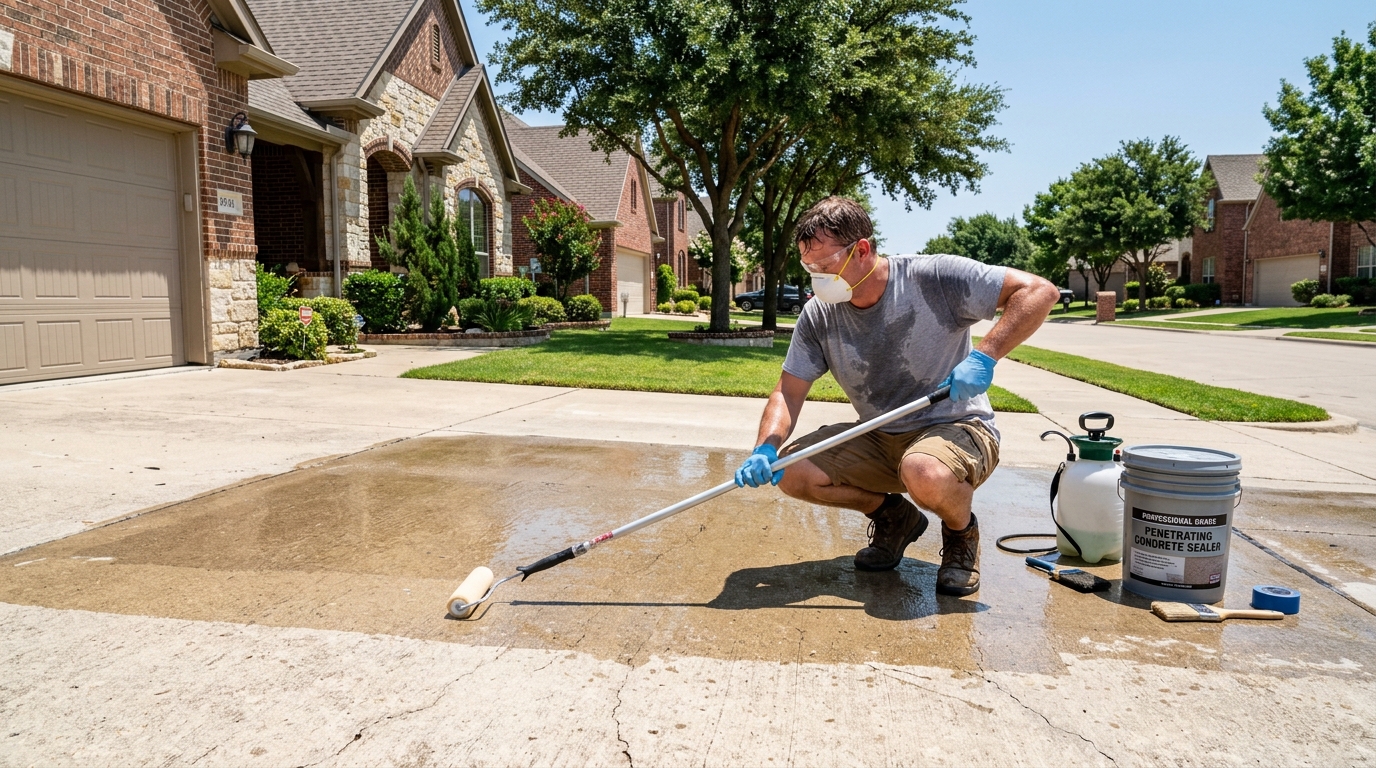
Sealing is the most important and cost-effective protective step. A properly applied sealer reduces water absorption by 50–80%, dramatically limiting the water available to freeze within the concrete’s pore structure. For driveways and patios, apply or reapply a concrete sealer in fall (September–November) before freeze season. This is also when the surface is easiest to prepare and the sealer cures quickly in moderate temperatures.
Control joint inspection should happen annually in fall. Control joints filled with flexible joint filler are the intended crack location — inspect that they’re intact and the filler is flexible. Hardened, cracked, or missing joint filler allows water to infiltrate below the slab, creating base erosion problems in winter and spring.
Drainage verification is particularly important before the spring rain season but should also be checked after winter events. Concrete that holds standing water during a freeze is far more vulnerable than concrete that drains quickly. Ensure your driveway and patio maintain proper drainage slope away from structures.
Deicing Products: What Damages Concrete and What Doesn’t
This is an area where conventional wisdom is often wrong, and the mistakes cost NRH homeowners significant concrete damage.
Rock salt (sodium chloride): Do not use on concrete. Rock salt lowers the freezing point of water, which increases the number of freeze-thaw cycles a concrete surface experiences during a single winter weather event. It also contributes to concrete scaling through chemical action. Rock salt is also corrosive to vehicle underbodies and landscaping.
Calcium chloride: Effective as a deicer but also causes concrete scaling with repeated use. Not recommended for concrete surfaces.
Magnesium chloride: Slightly less damaging than calcium chloride but still problematic with repeated application on concrete.
Safe for concrete: Sand provides traction without chemical damage and is the recommended traction agent for NRH concrete during winter weather events. Urea (the material in ice melt products marketed as “safe for concrete”) is also acceptable in moderate quantities, though less effective at very low temperatures.
Best practice: Use sand for traction, let ice melt naturally when temperatures rise above freezing, and avoid chloride-based deicers on concrete surfaces you want to maintain.
Post-Winter Inspection
After any significant winter weather event — particularly a multi-day freeze or an event with freezing rain — inspect your concrete for:
Surface scaling: Look for any areas where the surface layer appears to be flaking or popping off, exposing the aggregate beneath. Early-stage scaling can be treated with a concrete resurfacing overlay; advanced scaling may require slab replacement.
New cracking: Look for cracks that didn’t exist before the freeze event. Freeze-thaw stress sometimes initiates cracks at points of weakness in the slab.
Joint filler condition: Check that control joint filler hasn’t cracked or pulled away from the joint sides. Replace damaged filler before water infiltration worsens.
Drainage changes: Verify that any freeze-thaw-induced sub-base movement hasn’t altered the slab’s drainage slope.
For maintaining your concrete through all seasons, read our guide on maintaining your concrete driveway in Texas weather. For understanding why NRH’s clay soils amplify winter concrete risks, see why NRH clay soil demands reinforced concrete. If you’re planning new concrete work, read best time to pour concrete in North Richland Hills for seasonal guidance.
Post-Winter Concrete Inspection and Repair in NRH
North Richland Hills Concrete Pros assesses freeze-thaw damage and recommends the right repair approach. Call (888) 376-0955.
Related: